
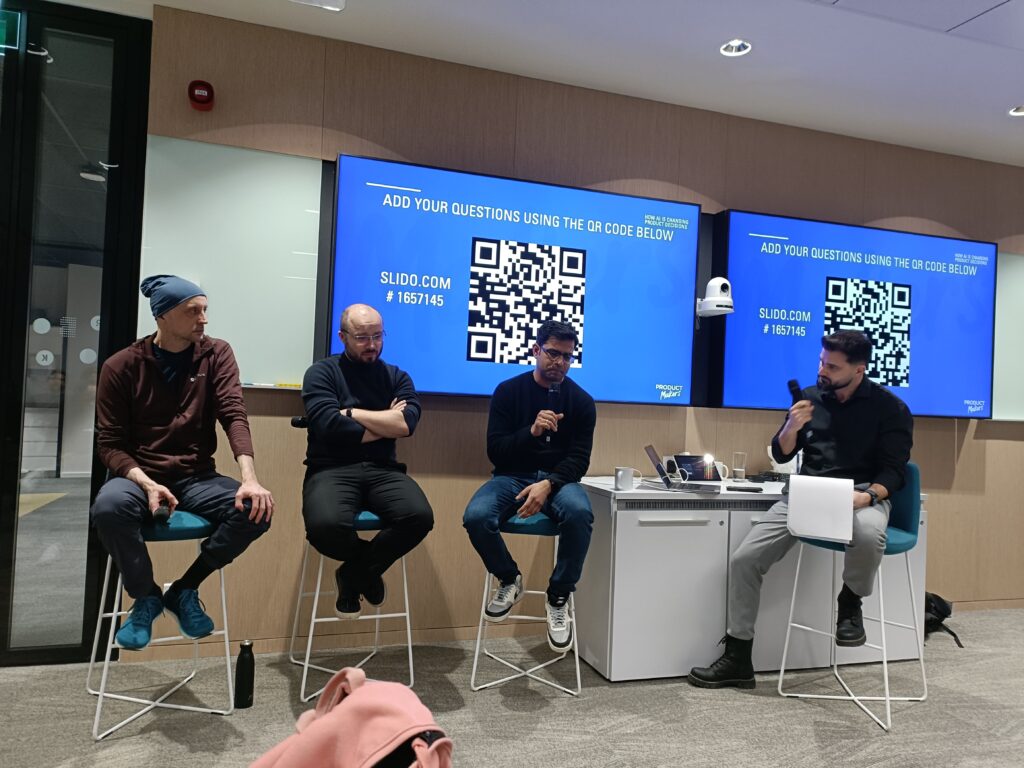
Last evening I attended “How AI is changing product decisions,” an event by Product Makers Romania. The event was held at the Booking Holdings office in Bucharest and brought together people eager to make the best use of AI within product development.
AI might sound like the next buzzword for some people. For others, it might look like something used only to help developers write code. In reality, AI has multiple uses – but when it comes to product development, the gap between idea and implementation is getting smaller every day.
Eliminating the layers
By taking advantage of AI tools, slim teams can deliver faster and eliminate the bottlenecks created by multiple layers between business stakeholders, product roles, and development roles. With AI tools built specifically for creating layouts and applications, a product owner can now input specifications directly into an AI tool and get a working output in a short period of time. This means that instead of creating requests and tasks – Jira stories for different teams down the development chain – that same content can now be prompted to AI directly.
One big advantage of this new way of developing products is eliminating miscommunication between layers. It’s not unusual for a request to arrive at the development stage slightly changed after passing through different teams, only for someone from the business side to notice after release that it’s not working as expected.
The Full-stack Founder
This shift also applies to new startups. Entire applications can now be built solo in a short period of time. As a founder, you can handle multiple roles using AI tools – and this could become a new concept: the “Full-stack Founder.” Not restricted to software development, but used in a broader way – handling everything from idea to marketing solo by stepping into different roles for short periods of time.
For this, founders with a broader overview have a clear advantage. They can move quickly without having to debate with anyone whether a button should be pink or blue.