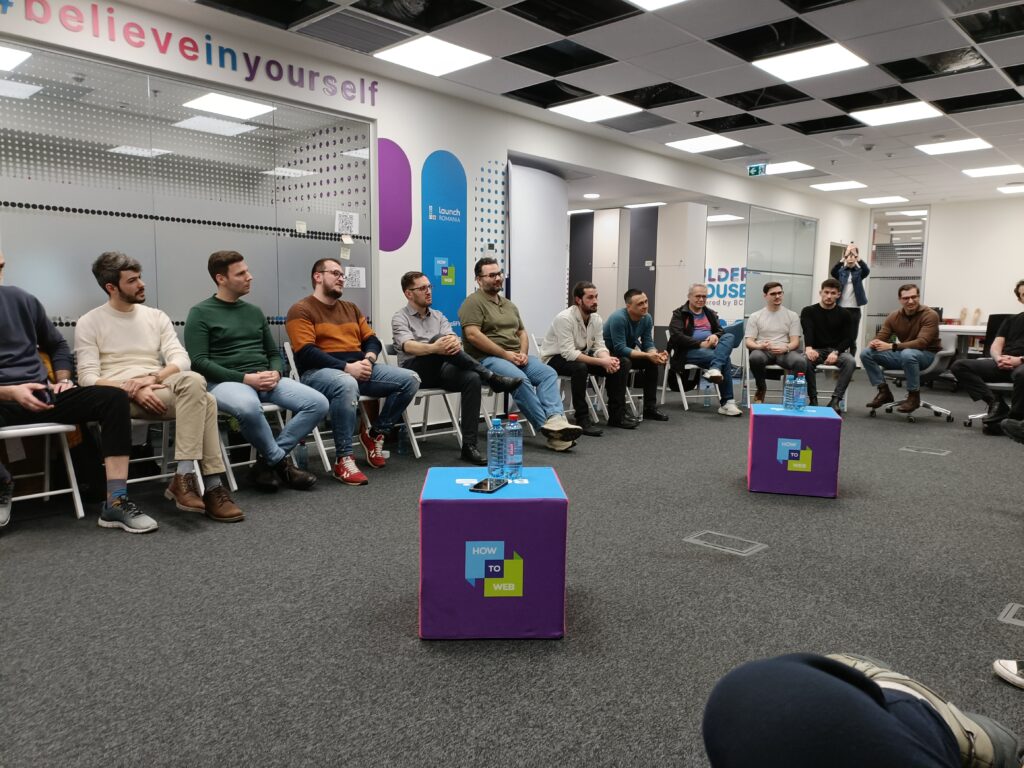
Two weeks ago, I attended the inaugural Dev Nights meetup at Builders House in Bucharest. The topic for this first edition was “Building with AI in 2026,” and the event was fully booked – a good sign of the local developer community’s interest in the subject.
The atmosphere was casual, with everyone taking time to introduce themselves. It was refreshing to see people from different backgrounds, all sharing a common interest in AI and its applications.

The Reality of Building with AI
One thing that stood out from the discussions: even with the many different AI tools people are using, the results often still have issues and require manual review. The improvements in coding are undeniable – building time for applications has been reduced drastically – but the code generated by AI isn’t necessarily production-ready.
What matters most is knowing what to request from AI, providing the necessary context, and offering good code examples. These factors significantly reduce output errors. Using your programming skills as leverage when working with AI tools allows you to build applications in a fraction of the time it would take otherwise.
An Interesting Observation
One surprising takeaway was learning that within many software companies, there’s still resistance from developers when it comes to using AI tools for coding. At this point in time, not using AI is a clear drawback – it’s also becoming increasingly difficult to keep up with competitors and third parties who are actively leveraging these tools.
Personally, I’ll continue using Claude for developing both RunningLog and Planaro. The productivity gains are too significant to ignore.